Skip to content
A Complete Guide for Business Owners and Tenants in the Tampa Bay Area
So you want to lease commercial space in Tampa, Florida. Maybe you are opening a restaurant in Ybor City, setting up a professional office in Westshore, or looking for a warehouse near Port Tampa Bay. The first question that almost every business owner asks is the same: how much does commercial rent cost in Tampa? The answer is: it depends a lot on what type of space you need, where it is located, and how you read the numbers on the listing.

Here is the short answer upfront before we dig into the details:
Space Type | Current Average Rate | Range |
Class A Office | $34.73 – $35.55 /SF/yr (Full Service) | $30 – $66/SF (Downtown/New Construction) |
Class B Office | $24.81 /SF/yr | $20 – $30/SF |
Class C Office | $22.64 /SF/yr | $18 – $26/SF |
Retail (NNN) | $26.93 – $29.47 /SF/yr | $13 – $40+/SF |
Industrial/Warehouse | ~$12.50 /SF/yr (NNN) | $8 – $18/SF |
Note: Office rates above are Full Service (FS) unless stated. Retail and industrial figures are Triple Net (NNN). These are not the same thing and comparing them without context will get you in trouble. Keep reading to understand exactly what these numbers mean for your business.
How Much Does Commercial Rent Cost in Tampa? The Full Breakdown
Tampa has developed into one of the most active commercial real estate markets in the southeastern United States, and the numbers prove it. The city is now the second most populous market in Florida, with more than 3.4 million residents across the metro area. Population growth has pushed tenant demand upward across every property type, from premium downtown office towers to small-bay industrial units tucked near I-75.
According to CommercialCafe’s 2024 Tampa Office Market Report, the average asking rent for all office classes in Tampa settled at $30.06 per square foot in 2024, with a modest year-over-year increase of 1.16%. The overall office vacancy rate that year stood at 15.08% across all asset classes.
That top-line number can be misleading on its own, though. The actual cost you pay depends entirely on three things: the class of the building, the submarket you choose, and the type of lease structure quoted.

Office Space Rent in Tampa: Class A, B, and C Explained
Office buildings in Tampa are categorized into three classes, and the difference in rent between them is substantial.
Class A Office Space
Class A is the top tier: newer buildings with modern finishes, premium locations, strong building management, and high-end amenities. In 2024, the average asking rent for Class A space in Tampa was $34.73 per square foot. By Q3 2024, that number had already climbed to $35.55 per square foot, according to data from Florida ROI’s Tampa Office Market Update.
The highest rents in the metro are found in Westshore and Downtown Tampa, where top-of-market Class A properties command $45 to $49 per square foot on a full-service basis. New construction projects, including Midtown, SkyCenter, and Water Street Tampa, push that ceiling even higher, with quoted rates reaching $60 to $66 per square foot.

Class B Office Space
Class B properties are the workhorses of the Tampa office market. These are older but well-maintained buildings, often in suburban locations or secondary downtown positions. The average asking rent for Class B space in 2024 was $24.81 per square foot. These properties typically offer a solid balance between cost and quality for businesses that do not need brand-new construction but still want a professional environment.
Class C Office Space
Class C space is the most affordable office tier, averaging $22.64 per square foot in Tampa in 2024. These buildings are older, have fewer amenities, and are often located in secondary markets or less accessible areas. For cost-focused businesses or those needing temporary space, Class C can be worth considering, but factor in potential renovation costs and less competitive lease terms.
Office Class | 2024 Avg Rate (Tampa) | 2024 Avg Rate (Florida Statewide) |
Class A | $34.73/SF | $40.20/SF |
Class B | $24.81/SF | $27.71/SF |
Class C | $22.64/SF | $22.62/SF |
Tampa Commercial Rent by Neighborhood and Submarket
One of the biggest variables in Tampa commercial rent is location. The same square footage can cost twice as much in Westshore as it would in Northeast Tampa or East Tampa. Here is how the major submarkets break down:
Submarket | Typical Rate Range | Notes |
Downtown Tampa / Water Street | $45 – $66/SF (FS) | Premium new construction; parking not included |
Westshore | $36 – $49/SF (FS) | Most active submarket; 37.2% of all leasing |
Midtown Tampa | $40 – $60/SF (FS) | New mixed-use development corridor |
Carrollwood / North Tampa | $22 – $30/SF (MG/FS) | Suburban office; mix of lease types |
Northeast Tampa / East Tampa | Below $30/SF (FS) | Secondary submarket; lower demand |
Ybor City / Channel District | Varies widely | Emerging mixed-use; watch for redevelopment |
According to Avison Young’s Tampa Office Market Reports, Tampa Bay logged a full-service average asking rent of $32.30 per square foot, up 11.2% from Q3 2019 despite elevated vacancy rates in some submarkets. Westshore alone accounted for 37.2% of all leasing activity in the most recent quarter, making it the undisputed center of gravity for Tampa office tenants.
One stat that stands out: Tampa is one of the only office markets in the entire country where current leasing activity is actually higher than it was in 2019, before the remote work disruption. That speaks to the health of the local economy.
Commercial Retail Rent in Tampa: What Retailers Need to Know
Tampa retail is one of the tightest markets in the country right now, and that has a direct effect on price. The vacancy rate for retail space in Tampa sits at just 3.4%, well below national averages. When supply is constrained and demand holds steady, rents go up.
According to a Q2 2025 Retail Market Report from Matthews Real Estate, the average asking retail rent in Tampa was $26.93 per square foot in recent market data, with a five-year rent growth rate of 35%. Westshore and South Tampa have some of the highest retail rents in the metro, with rates along Kennedy Boulevard frequently exceeding $40 per square foot.
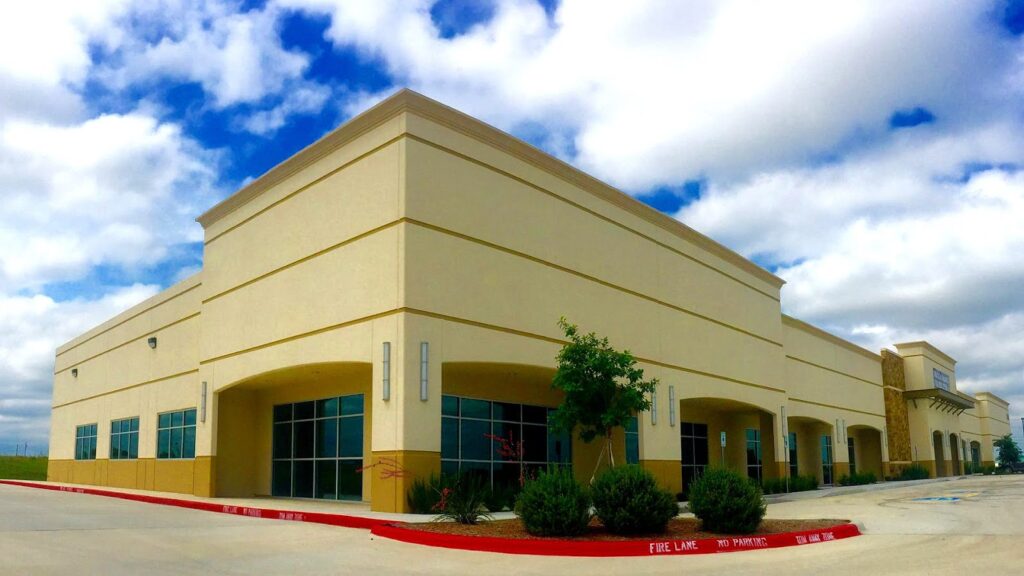
Anchor tenants occupying large-format spaces of more than 10,000 square feet can find more favorable pricing in the $13 to $15 per square foot range, since landlords benefit from their ability to drive foot traffic. Smaller inline spaces in high-traffic centers command significantly more.
Retail leases in Tampa are almost universally quoted as Triple Net (NNN), which means the advertised rate is only the base rent. You will pay additional costs on top of that number for property taxes, insurance, and common area maintenance. More on that in the lease type section below.
Looking ahead, Matthews Real Estate projects retail rent growth of 3% to 4% in the coming quarters, and new construction remains well below historical averages. With 728,000 square feet under construction across the entire metro against a market inventory of millions of square feet, vacancy is unlikely to rise meaningfully anytime soon.
Industrial and Warehouse Rent in Tampa: The Market on a Run
If you are looking for warehouse or distribution space near Tampa, you are entering one of the hottest industrial submarkets in Florida. Industrial rents have surged in recent years driven by e-commerce demand, Port Tampa Bay logistics activity, and limited infill space.
Industrial rental rates in Tampa have reached an all-time high of approximately $12.50 per square foot, which represents a staggering 69.1% increase over the past five years. Common Area Maintenance (CAM) charges add another $2.50 to $3.75 per square foot on top of that, depending on property condition and location.
The Tampa metro has approximately 5.6 million square feet of industrial space under construction, and around 75% of that pipeline is already pre-leased. Small-bay infill industrial properties under 20,000 square feet remain especially scarce, and rents for those spaces frequently exceed market averages.
Overall industrial vacancy sits around 6.3%, which is healthy but climbing slightly due to new deliveries. The average sale price for industrial properties was $136 per square foot, with an average cap rate of 6.7%.
Understanding Tampa Commercial Lease Types: Full Service, Modified Gross, and NNN
This section is critical. The quoted rent on a commercial listing and the amount you actually pay are often very different numbers. The reason comes down to lease structure. In Tampa, three main lease types dominate the market, and each one allocates expenses differently between landlord and tenant.
Full Service (FS) / Gross Lease
Under a Full Service lease, the base rent includes everything: property taxes, insurance, common area maintenance, janitorial service, utilities, and building management. You pay one number per month and the landlord handles the rest. This type of lease is the standard format for office space in large multi-story buildings in Westshore and Downtown Tampa.
The convenience comes at a price since FS rates are higher than equivalent NNN rates to account for all those included expenses. Most Class A and Class B office leases in Tampa are quoted on a full-service basis.
Modified Gross (MG)
A Modified Gross lease falls between FS and NNN. Base rent covers expenses as of the first year of the lease (the “base year”), and you are responsible only for increases in those costs over subsequent years. You will also typically pay your own utilities and may be responsible for HVAC maintenance and janitorial service.
This structure is common in suburban office parks, single-story office buildings, and Carrollwood-area properties in Tampa. It provides some cost predictability while shifting inflation risk back to the tenant over time.
Triple Net (NNN) Lease
NNN leases are the standard for retail and industrial properties. The quoted rate is base rent only, and the tenant pays separate, additional charges for property taxes, building insurance, and common area maintenance. The landlord collects these estimates monthly and reconciles them annually.
This is where many tenants get surprised. A retail space listed at $20 per square foot NNN can easily become $26 to $28 per square foot once you add actual CAM charges, taxes, and insurance. For industrial properties, NNN add-ons typically run $2.50 to $3.75 per square foot.
In Tampa’s major office buildings, the add-on factor for multi-tenant properties typically runs 16% to 20%. This means that if a space has 2,000 usable square feet, you may be paying rent on 2,380 rentable square feet once the common area load is applied. Always ask whether a quoted size is Rentable Square Feet (RSF) or Usable Square Feet (USF).
Lease Type | What’s Included in Quoted Rate | Tenant Also Pays | Most Common In |
Full Service (FS) | Base rent, taxes, insurance, CAM, utilities, janitorial | Phone/data only | Class A/B office towers |
Modified Gross (MG) | Base rent + expenses for Year 1 | Expense increases, utilities, janitorial | Suburban office, single-story |
Triple Net (NNN) | Base rent only | Taxes, insurance, CAM, utilities, janitorial | Retail, industrial, warehouse |

A Major Tax Change: Florida Finally Eliminates Commercial Rent Sales Tax
For years, Florida stood alone as the only state in the country that charged a sales tax on commercial lease payments. That just changed.
On June 30, 2025, Governor Ron DeSantis signed Florida House Bill 7031, officially repealing the state sales tax on commercial real property leases effective October 1, 2025. This eliminates both the state Business Rent Tax and county surtaxes on commercial lease payments. You can read the full analysis from Holland & Knight: Florida HB 7031 Becomes Effective Oct. 1, 2025.
Why does this matter? For a business leasing 5,000 square feet of office space at $30 per square foot in Hillsborough County, the previous 3.5% commercial rent sales tax added more than $5,200 per year to occupancy costs. That cost is now gone for lease periods starting October 1, 2025 or later.
Here is how the commercial rent tax evolved in Hillsborough County (the county that includes Tampa):
Period | Commercial Rent Tax Rate (Hillsborough) | Notes |
Pre-June 2024 | 5.5% or higher | State rate plus county surtaxes |
June 1, 2024 – Dec 31, 2024 | ~3.5% | State reduced to 2%, plus surtaxes |
Jan 1, 2025 – May 31, 2025 | ~2.5% | Temporary surtax suspension |
June 1, 2025 – Sept 30, 2025 | 3.5% | Surtax suspension expired |
Oct 1, 2025 onwards | 0% | Full repeal via HB 7031 |
The official Florida Department of Revenue guidance on these changes is available at: floridarevenue.com. This is a landmark change that directly lowers the cost of doing business in Tampa and throughout Florida.
Important note: Sales tax is still due on commercial lease payments for occupancy periods before October 1, 2025. Tenants dealing with annual CAM reconciliations that span both sides of that date should confirm with their accountant how to handle the proration correctly.
What Factors Drive Commercial Rent Prices in Tampa?
Understanding the headline rate is step one. Understanding why prices are where they are helps you negotiate better. Here are the main factors shaping commercial rent across Tampa right now:
1. Population Growth and Business Expansion
Tampa Bay’s population surpassed 3.4 million residents, making it the second-largest market in Florida. Hillsborough County has been recognized by SmartAsset as one of the top counties in the state for economic investment, based on business growth, GDP growth, and new building permits. That sustained demand for space across all categories keeps rents elevated and vacancy tight.
2. Major Employer Expansion
High-profile tenant activity is pushing Class A rents upward. Fisher Investments recently signed one of the largest office leases in Tampa’s history, occupying three full buildings at the Renaissance Center and effectively doubling its regional footprint. Companies like Foot Locker, GEICO, and Pfizer have also expanded operations in the area. When large employers anchor a market, neighboring properties gain pricing power.
3. Limited New Supply
New office and retail construction has been modest compared to demand. For retail, just 728,000 square feet is under construction across the entire metro. For industrial, pre-leasing rates of 75% for the development pipeline mean that new inventory is absorbed before it even opens. Limited supply plus strong demand equals upward rent pressure.
4. Rising Operating Expenses
Even where base rents have grown modestly, the total cost of occupying commercial space has risen sharply. Operating expenses for Class A multitenant buildings have roughly doubled over five years, going from around $10 per square foot to over $16 per square foot. For tenants on full-service leases, this is embedded in the escalation clauses. For NNN tenants, it shows up directly in annual reconciliations.
5. Submarket Demand Divergence
Not all of Tampa is moving in the same direction. Westshore and Downtown Tampa are experiencing premium rent growth and falling vacancy, while secondary submarkets like Northwest Tampa have vacancy rates as high as 28.62%. A business willing to locate in a less central area can find significantly better deals, but may trade off accessibility, prestige, and talent attraction.
6. Port Tampa Bay and Logistics Infrastructure
Port Tampa Bay is Florida’s largest port and a driver of industrial and logistics demand across the region. Combined with Interstate 75 and Interstate 4 access, the area is a natural distribution hub. That geographic advantage keeps industrial rent elevated compared to landlocked Florida markets. The City of Tampa’s Business Resources page describes the region’s infrastructure and incentive programs for businesses considering relocation.
Opportunity Zones and Tax Incentives for Commercial Tenants in Tampa
If you are looking to reduce your overall cost of doing business in Tampa, it is worth knowing that Hillsborough County has several designated Qualified Opportunity Zones, particularly near the University of South Florida, Tampa International Airport, Ybor City, Palm River, and Port of Tampa. Businesses and investors operating within these zones may qualify for capital gains tax deferrals and exclusions under federal Opportunity Fund rules.
For commercial real estate investors, projects within Opportunity Zones that qualify as ‘substantially improved’ can access these incentives. This has made certain areas of Tampa more attractive for development and may result in newer or renovated commercial space becoming available in areas that were previously overlooked.

Example B: Retail Space in South Tampa (NNN Lease)
You lease 1,500 SF of inline retail at $35/SF/year NNN with estimated CAM/Tax/Insurance of $8/SF.
Cost Component | Annual | Monthly |
Base rent (NNN) | $35 x 1,500 = $52,500 | $4,375 |
CAM + Tax + Insurance | $8 x 1,500 = $12,000 | $1,000 |
Utilities (tenant responsibility) | Varies | Budget $300 – $600+ |
Sales tax (repealed Oct 2025 forward) | $0 | $0 |
Total estimated cost | $64,500 – $67,500/year | $5,375 – $5,625/month |
Notice how the NNN space’s real cost is 23% higher than the base rent figure. This is the most common mistake new commercial tenants make, and it is why a broker or attorney should always review your full lease before you sign.
Negotiating Commercial Rent in Tampa: Tips That Can Save You Thousands
Commercial leases are negotiable. Most tenants do not know this, but landlords expect it. Here are specific areas where you have leverage in Tampa’s current market:
- Free Rent Period: For new leases, it is common to negotiate 1 to 3 months of free rent (called a “rent abatement”) at the start of the lease, especially in buildings with higher vacancy.
- Tenant Improvement Allowance (TI): Ask the landlord to contribute toward build-out costs. In a competitive leasing environment, landlords may offer $20 to $60 per square foot in TI allowance for longer-term leases.
- CAM Caps: Negotiate a cap on annual CAM increases, typically 3% to 5% per year, to protect yourself from surprise cost jumps in NNN leases.
- Audit Rights: Make sure your lease gives you the right to audit the landlord’s CAM expense calculations annually.
- Renewal Options: Lock in a renewal option at a predetermined rate or formula before you sign. In a rising rent market like Tampa, this can be worth a significant amount.
- Get Everything in Writing: As industry professionals note, even if it is a verbal agreement, an email, or a handshake deal with someone you trust, always document every negotiated term before signing. Deals change as time passes.
Tampa Commercial Real Estate Outlook: Where Each Sector Is Headed
The overall trajectory for Tampa commercial real estate looks stable with pockets of strong growth. Here is where each sector is headed:
Office
Tampa’s office market is one of the most resilient in the country. Vacancy declined to 20% by end of 2024, a 120 basis point improvement year-over-year and the lowest level since mid-2022. Class A demand remains particularly strong, with the Westshore submarket continuing to drive leasing volume. Employment in the region has grown 18% since 2019, providing ongoing organic demand for office space.
Retail
Retail vacancy at 3.4% is near historic lows. Rents grew 35% over five years and are projected to grow another 3% to 4% over the next few quarters. Limited new supply means landlords hold pricing power, and well-located spaces are leasing quickly. The primary risk to the retail market is discretionary spending pullback from consumers, which has already pushed lifestyle center vacancy to 19.1%.
Industrial
Industrial is in a slight recalibration period after years of record growth. Vacancy has ticked up to 6.3% as new supply was delivered, but pre-leasing rates remain strong and small-bay infill space is still extremely tight. Long-term, Tampa’s position as a logistics gateway via Port Tampa Bay and its highway network keeps industrial fundamentals healthy.
For the most current market data, Crexi’s Tampa Commercial Real Estate Market Report is updated regularly and provides a good overview of trends across all property types.
My Recommendation: What to Do Before You Sign a Commercial Lease in Tampa
After reviewing data from more than 10 sources on Tampa commercial real estate, I would offer this guidance to any business owner starting the leasing process:
First, do not compare office and retail listings without adjusting for lease type. A $30/SF full-service office rate and a $22/SF NNN retail rate are not directly comparable. The retail space’s total cost, once you add CAM, taxes, and insurance, may be higher than the office.
Second, use a tenant’s broker. In Tampa Bay, tenant representation is typically free to the tenant since the fee is paid by the landlord. Firms like Colliers, Avison Young, and local boutique firms have brokers who specialize in specific submarkets and property types. They can also tell you whether an asking rate is fair compared to recent comparable transactions.
Third, take advantage of the new tax environment. The elimination of Florida’s commercial rent sales tax is a real cost reduction. If you are negotiating a lease that started before October 2025, make sure your lease structure accounts for the reduced rate going forward.
Fourth, explore Opportunity Zone locations if you are a startup or growing business. The areas near USF, Ybor City, and Port Tampa Bay offer potential tax advantages on top of competitive rents in developing corridors. Hillsborough County’s Economic Development resources are a good starting point.
Finally, treat the lease as the long-term financial commitment it is. A five-year lease on 3,000 square feet at $35/SF is a $525,000 commitment before operating expenses. It deserves the same attention as any major business investment.
Tampa is a strong and growing market. Whether you are setting up your first office, expanding a retail footprint, or locking down warehouse space ahead of peak season, the data points to a city where commercial space is in demand and where the fundamentals support continued growth. Do your homework, negotiate confidently, and make sure you understand exactly what you are paying for before you put pen to paper.
Research Sources
- CommercialCafe Tampa Office Market Report 2024: https://www.commercialcafe.com/office-market-trends/us/fl/hillsborough-county/tampa/
- Florida ROI Tampa Office Market Update: https://roireal.estate/tampa-office-market-update-2025/
- Florida ROI Industrial Real Estate Market Update: https://roireal.estate/tampa-industrial-real-estate-market-update-2025/
- Matthews Tampa Retail Market Report (Q2): https://www.matthews.com/market_insights/q225-retail-market-report-tampa-fl
- Avison Young Tampa Office Market Reports: https://www.avisonyoung.us/web/tampa/office-market-report
- Crexi Tampa Commercial Real Estate Market Report: https://www.crexi.com/blog/tampa-commercial-real-estate-market
- Tampa Bay Business Wire: Office Leasing and Retail Market Updates: https://tbbwmag.com/2024/07/03/real-estate-quarterly-an-update-on-commercial-real-estate-and-office-market/
- Holland & Knight: Florida HB 7031 Commercial Lease Tax Repeal: https://www.hklaw.com/en/insights/publications/2025/07/florida-hb-7031-becomes-effective-oct-1-2025
- Florida Department of Revenue TIP 25A01-02 (Hillsborough Surtax): https://floridarevenue.com/taxes/tips/Documents/TIP_25A01-02.pdf
- Hillsborough County Economic Development Rankings: https://www.hillsboroughcounty.org/en/businesses/economic-development/rankings-and-accolades
- Hillsborough County Opportunity Zones: https://hillsboroughcounty.org/en/businesses/land-development/opportunity-zones
- City of Tampa Business Resources: https://tampagov.net/business-resources
- Bounat Tampa Office Real Estate Market Report: https://bounat.com/news/tampa-office-real-estate-market-report/
- Cushman & Wakefield Tampa Retail MarketBeat: https://assets.cushmanwakefield.com/-/media/cw/marketbeat-pdfs/2025/q2/us-reports/retail/tampa_americas_marketbeat_retail_q22025.pdf
- Office Space Brokers: Florida Sales Tax on Commercial Leases Eliminated: https://officespacebrokers.com/florida-eliminates-sales-tax-on-commercial-leases-starting-october-1-2025/